As a homeschooling mother who teaches French both in person and online, I understand the unique challenges—and joys—of helping children learn a new language at home. When I first began teaching my own boys French, I quickly realized that the traditional methods of drilling and flashcards weren’t connecting with them. Children learn best through play, movement, stories, and creativity. If you’ve been searching for ways to teach French colors that feel natural, engaging, and fun, this article will walk you through effective, flashcard-free methods you can use today.
Whether you are brand new to French or you’ve been weaving it into your homeschool for a while, these strategies will help your children fall in love with the French language.
Why Avoid Flashcards?
Flashcards can feel repetitive and disconnected from daily life. While they may have a place for older students or as a quick review, younger children often become bored or disengaged. Instead, when colors are woven into stories, songs, art, and games, children remember them effortlessly—and use them in real life.
By teaching French colors in a way that connects to your child’s world, you give meaning to the words beyond simple memorization.
Method 1: Learn Through Movement Games
Children love to move, and movement helps anchor language into memory. Try this simple game:
- Place colored papers or objects (red, blue, yellow, green, etc.) around the room.
- Call out the French color: “Rouge!” (Red)
- Ask your child to run and touch that color.
Variation: Make it a scavenger hunt. Say “Trouve quelque chose bleu” (“Find something blue”), and watch your child bring back items around the house.
This game transforms vocabulary into action, and even toddlers will quickly begin saying “bleu, rouge, jaune” out loud.
Method 2: Teach Colors Through Songs
Music is one of the most effective ways to teach language. Children naturally pick up melody, rhythm, and words when they are set to a tune.
A favorite resource is Learn French and Go, which offers songs and audio to make French more accessible. You can also create simple chants with everyday tunes your children already know (like Twinkle, Twinkle, Little Star), replacing the lyrics with French color words.
For example:
- Rouge, bleu, vert, et jaune…
Singing builds joy and memory without effort.
Method 3: Teach Colors Through Art and Creativity
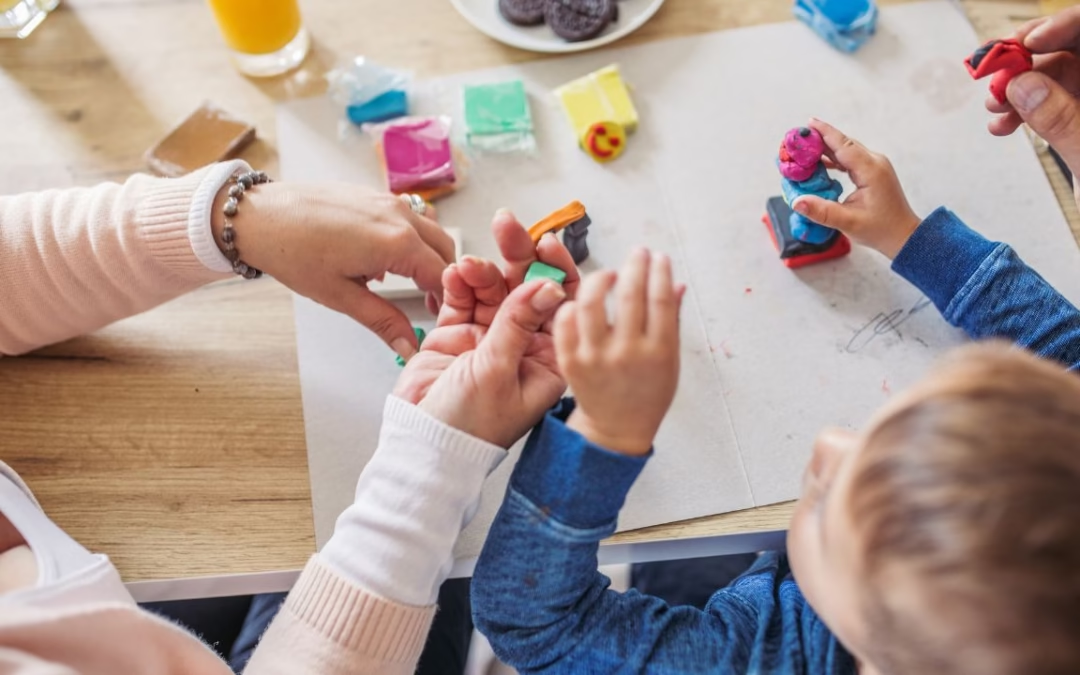
Art projects are a beautiful way to introduce French vocabulary. As your children paint or color, use the French words:
- “Peignons avec du bleu.” (Let’s paint with blue.)
- “Choisis un crayon rouge.” (Choose a red crayon.)
One activity my kids love is creating a rainbow collage. Each strip is labeled with the French word: rouge, orange, jaune, vert, bleu, violet. By combining color recognition with hands-on creativity, the words stick naturally.
Method 4: Teach Colors Through Stories
Children remember best through narrative. Reading picture books in French, or even simple bilingual books, is an excellent tool.
I’ve written two books designed exactly for this purpose:
- Young Missionaries Learn French Words While Traveling
- Young Missionaries Learn French Words In The Garden
Both books bring French vocabulary to life in meaningful, child-friendly settings. When children encounter rouge for a rose in the garden, or bleu for the sky while traveling, the word is connected to a story and becomes part of their memory.
Method 5: Teach Colors Through Everyday Life
French doesn’t have to stay confined to “lesson time.” Use colors in daily routines:
- At breakfast: “Ton bol est jaune.” (Your bowl is yellow.)
- During play: “La voiture rouge roule vite.” (The red car goes fast.)
- At bedtime: “Bonne nuit sous ta couverture bleue.” (Good night under your blue blanket.)
The more children hear these words in context, the faster they retain them.
Tips for Parents Who Aren’t Fluent
You may be thinking, “But I don’t speak French!” That’s okay. Here’s what I recommend:
- Use online audio resources like Learn French and Go to hear proper pronunciation.
- Learn alongside your children—your willingness to model learning is powerful.
- Keep it light and fun; don’t worry about mistakes. Children are resilient learners and will quickly adapt to the right sounds.
Bringing It All Together
Teaching colors in French doesn’t require flashcards, drills, or even fluency. It requires joy, consistency, and creativity. By weaving French words into games, songs, art, stories, and daily life, you’ll help your children not only learn colors but also cultivate a love for the French language.
As a homeschooling mother and French teacher, I’ve seen firsthand that children thrive when learning feels like play. Try one of these methods today, and watch your child smile as they say their first French colors.
And if you’d like more tools to bring French to life in your homeschool, don’t forget to check out my Young Missionaries Learn French Words books and explore resources from Learn French and Go.
Final Encouragement
Remember, you don’t have to be fluent to begin. Every small step counts, and every joyful moment of learning together builds both language skills and family memories.
Which activity will you try first—games, songs, or stories?